Recovered source / preserved interfaces / qualified claims

Point at a window.
Read a CD. Pause a process.

I thought I remembered a collection of little VB6 programs. The source says something larger: a workshop full of system inspection, networking, media pipelines, protocol work and complete desktop interfaces.

Release is a claim, not a filename

I remember three public releases during the Elite Prodigy period: Darks Revenge, Darks Revenge 2 and Insane Chat. Contemporary evidence supports those releases. XP Search is different: a later c0ld.net file-database record confirms public version 1.0.0 in September 2005, and an earlier forum exchange records an outside tester still using it.

The other projects remain exactly what the evidence establishes: working source, private programs, experiments or incomplete branches. An EXE or setup package is not silently turned into a public release.

Systems as material

Windows underneath Windows

Two projects made operating-system internals visible and controllable from VB6.

Windows underneath Windows

Elite API Spy

Surviving source
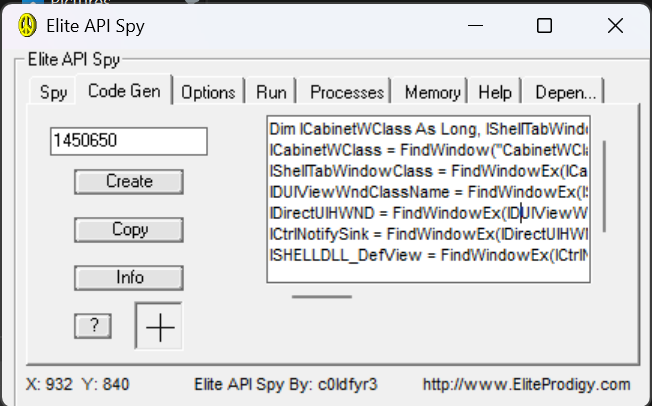
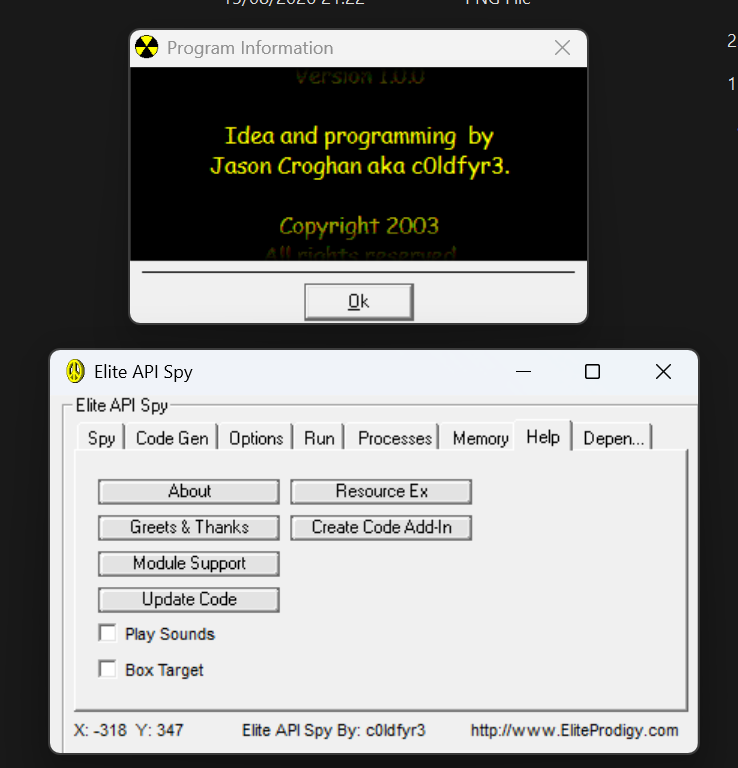
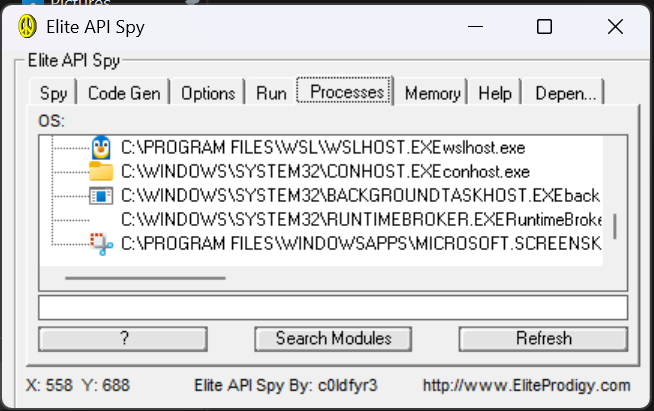
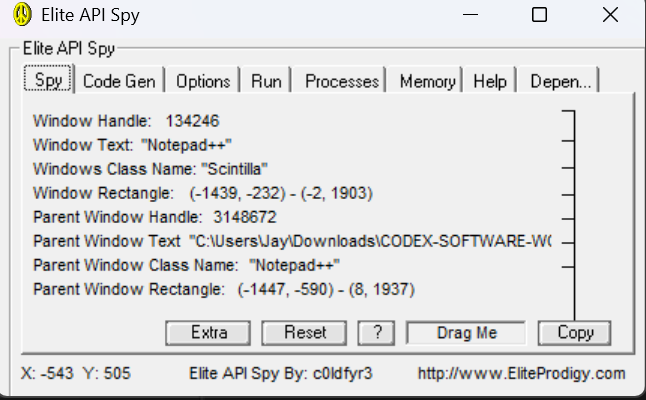
Elite API Spy code generator showing generated Visual Basic window-finding code
Elite API Spy turned a selected window's parent and child relationships into reusable VB declarations and calls.

A window inspector, code generator and extensible developer tool—not just a cursor readout.

Its source follows the cursor to a live window handle, reads class names and captions, walks parent and child relationships, and generates FindWindow-style VB code. The options surface offers operations such as clicking or setting text; another path can apply selected operations through the RunCode companion.

Preserved .eas templates feed code-generation add-ins, while RunCode dynamically invokes code through a DLL interface. That is real extensibility, but not proof of a completely generic arbitrary-DLL plug-in system. Process, memory and advert subsystems make the application much broader than its name.
A firewall-shaped experiment

Fire Gate

Source confirmed
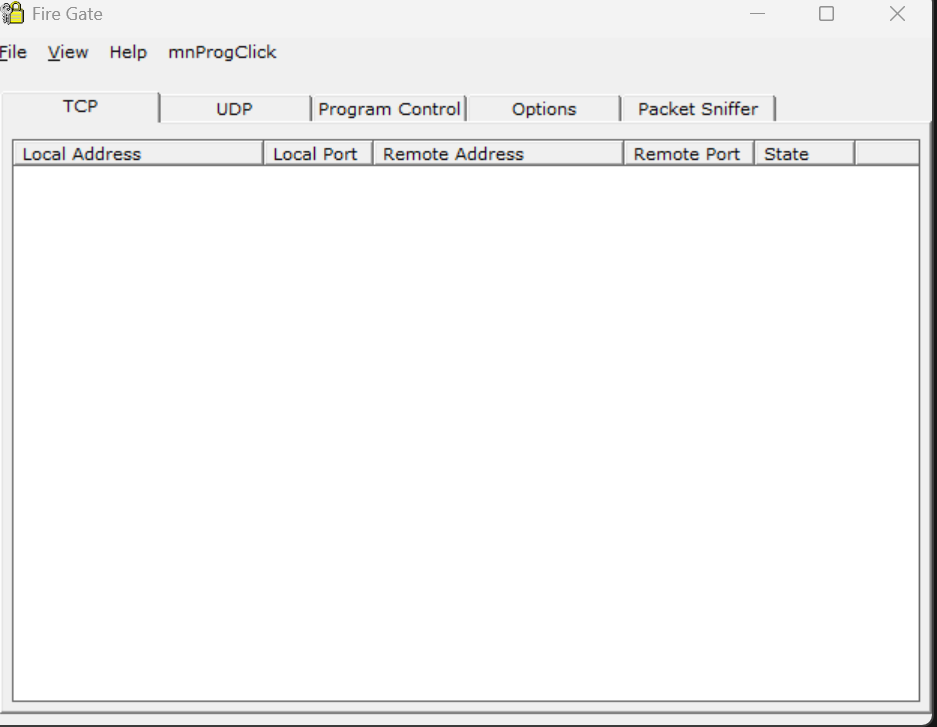
Fire Gate interface showing connection tables, owning programs and application rules
Fire Gate joined network tables to processes and application rules in one interface.

Connections, owning processes, rules, icons—and a startling user-mode answer to “pause while I decide.”

Fire Gate reads Windows TCP and UDP tables, maps connections back to processes, extracts program icons and distinguishes client from server behaviour. Rules combine the program with local or remote ports.

When it needed a decision, the source could suspend every thread in the process, display an allow-or-deny prompt, then resume or terminate it. That is a substantial user-mode firewall experiment, not evidence of a kernel filtering driver or a modern security boundary.

The public centre

Applications that carried the name

The two screenshots belong to two distinct released applications and remain inside their own records.

The public centre

Darks Revenge 2

Elite Prodigy-era release
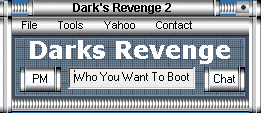
Darks Revenge 2 silver interface with private-message, target and chat controls
Darks Revenge 2 presented its Yahoo toolbox through a compact silver interface.

A genuine, much-expanded sequel with an intact 135-member manifest and more than 51,000 physical source lines. It combined a Yahoo booter with a sprawling toolbox.

The historical account is candid about the harmful core and equally precise about the engineering growth, contemporary credits and public distribution.

Read the Darks Revenge chapter

The public centre

Insane Chat

Elite Prodigy-era release
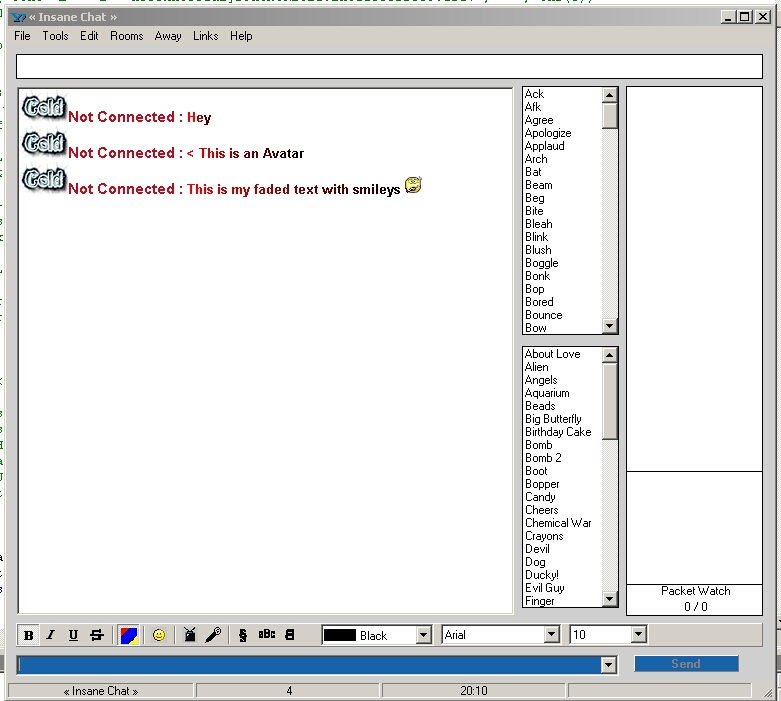
Insane Chat interface showing a Yahoo-style room, formatted transcript, user list and smileys
Insane Chat's preserved interface shows a room transcript, user list, formatting, smileys and multiple client controls.

A direct Yahoo Chat client built around YCHT, with rooms, private messages, formatted transcripts, sounds, smileys, inline images and anti-spam. Its preserved source shows an incomplete YMSG transition, not a complete YMSG protocol client.

Jay remembers a later stable version and dedicated microsite; the complete later source boundary remains unresolved.

Read the Insane Chat story context

Media systems

From pressing Play to reading a CD

Playback and ripping are separate engineering stories, so they no longer share one visual block.

Media systems

Elite MP3

Private project
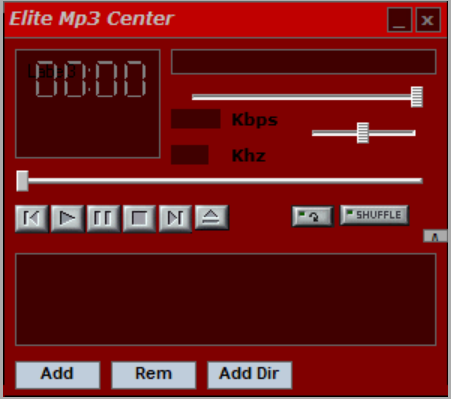
Elite MP3 player with transport controls, playlist and spectrum display
Elite MP3's compact surface combines transport controls, playlist, metadata and visualisation.

Elite MP3 was not an encoder. Its implementation uses Windows MCI for playback, adds playlists, seeking and volume, parses ID3v2 metadata and drives a custom spectrum visualiser. LAME belongs to Elite Ripper, not this player.

Media systems

Elite Ripper

Private project / screenshot preserved
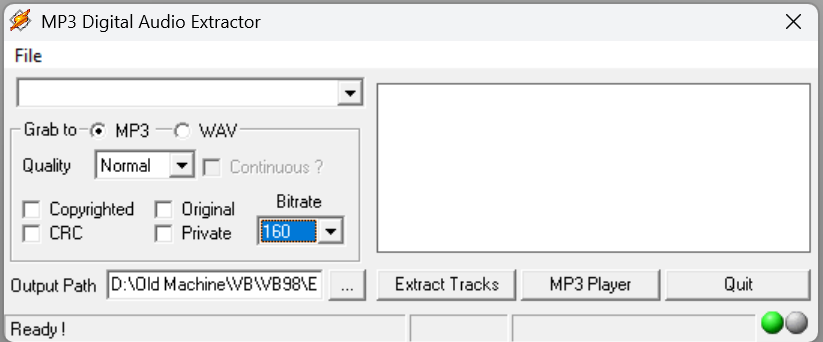
Elite Ripper interface with CD track selection, MP3 and WAV extraction, bitrate, destination and player controls
Elite Ripper's preserved interface shows the CD-track, encoding, destination and player workflow in one surface.

Elite Ripper connected a CD table of contents to selected-track extraction, WAV output or LAME MP3 encoding, progress, naming and ID3 metadata. External libraries did the low-level CD and encoding work; Jay's application orchestrated the whole hardware-to-file pipeline.

“It ripped CDs, and I was very proud of it” is Jay's present-day recollection; no drive or encoder was exercised during preservation.

Files and transfers

Complete journeys, and one important gap

Downloader has its own screenshot. File Splitter has none and remains deliberately text-only.

Files and transfers

Elite Downloader

Private / incomplete source
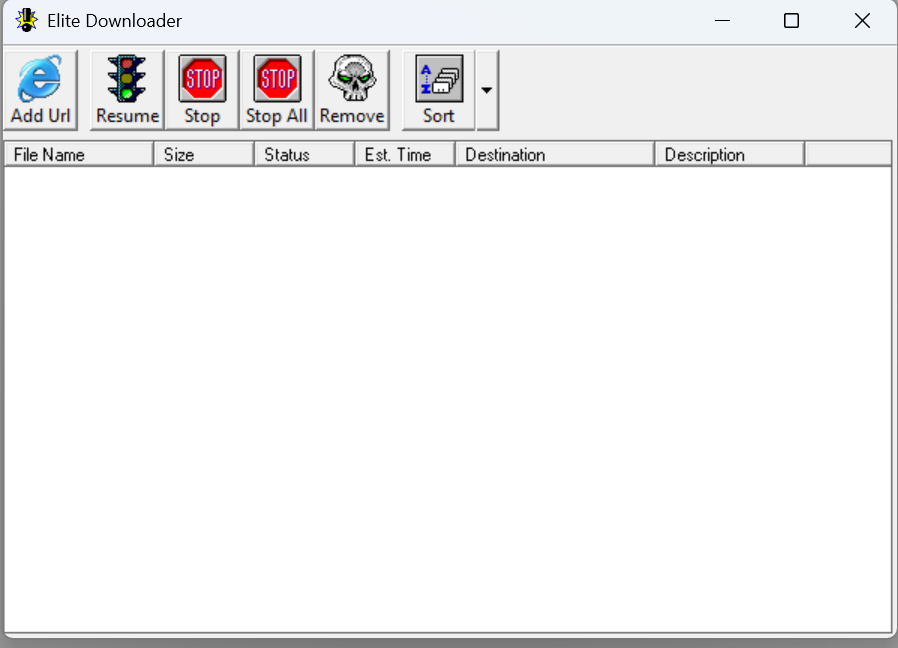
Elite Downloader interface showing queued downloads, status, destination and progress controls
Elite Downloader's preserved interface shows its queue, sorting, status and progress model.

The code establishes an intended download-manager surface with queued items, status and progress. Jay remembers working pause and resume—a capability that mattered when dial-up transfers were slow and interruptions were expensive.

The bounded source leaves the Resume toolbar branch as a debug stub and does not establish a complete HTTP range-resume engine. The public story keeps both facts.

Files and transfers

Elite File Splitter

Private project / no screenshot

This smaller project does establish its entire job: split a binary file into user-selected chunk sizes, show progress and create a batch joiner that reconstructs the original.

Jay remembers choosing those sizes around file-host upload limits. The code proves configurable splitting and reassembly; the particular hosting constraint is present-day context.

9 safe-text files · roughly 875 code-side lines · source confirmed

After Elite Prodigy

The workshop continued

XP Search is a later c0ld.net release, not a fourth Elite Prodigy-era release.

Systems, protocols and ethical edges

Some projects need explanation more than celebration

Each project has its own boundary. A screenshot can never float into the next record.

Systems, protocols and ethical edges

Free Mem

Private project
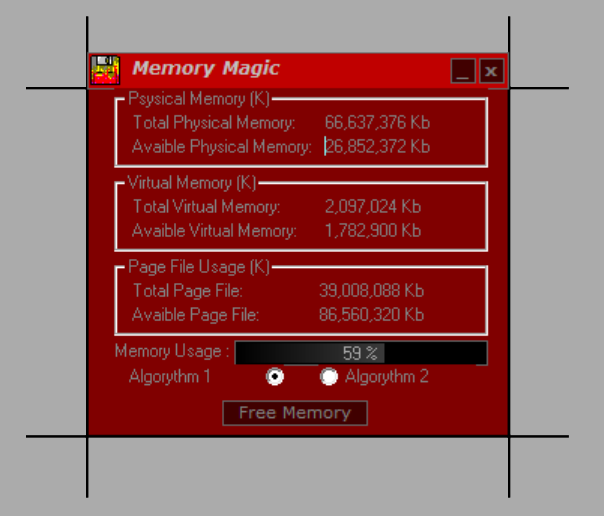
Free Mem interface showing physical, virtual and page-file memory statistics and two algorithms
Free Mem makes its memory measurements and two pressure-and-release algorithms visible.

Two approaches deliberately allocate memory and then release it, while the interface reports system memory status. That confirms the pressure-and-release mechanism.

Jay remembers the intended effect as pushing inactive pages toward the page file so only needed pages returned to physical RAM; the source does not itself measure that effect. It is historical technique—not modern advice.

Systems, protocols and ethical edges

Any Relay

Prototype / no screenshot

Only about 50 code-side lines, but they form a complete protocol-agnostic two-socket relay core: listen, accept, connect upstream and forward arriving bytes in both directions.

Jay remembers defensive interception and analysis as the intention. Inspection, modification, logging, endpoint configuration and multi-client handling are not established in this boundary.

Systems, protocols and ethical edges

Sig Finder

Private later tool / no screenshot

A Half-Life 2 mod signature locator that reads selected server-library bytes and renders them as a hexadecimal signature. Jay remembers using this after Counter-Strike updates moved compiled functions.

The source confirms the byte-to-signature tool; it does not establish wildcard or mask generation or independently date each use.

Systems, protocols and ethical edges

Y! Killer

Historical harmful tool / screenshot preserved
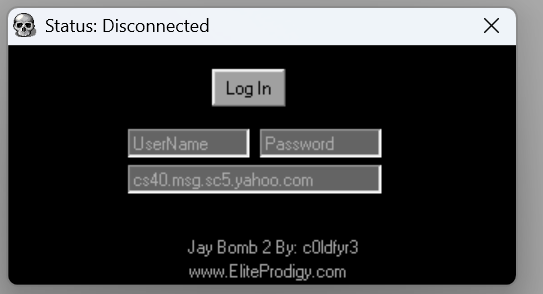
Y! Killer historical disconnected login interface branded Jay Bomb 2 by c0ldfyr3
Y! Killer's preserved disconnected control surface carries its Jay Bomb 2 and Elite Prodigy branding.

A Yahoo private-message flooding tool that exploited weaknesses in the old messaging protocol/client and could overwhelm another user's client.

The source confirms the aggressive purpose and timer-driven interface. The archive describes it as historical ethical evidence and withholds reusable packet, identity and rate details.

Systems, protocols and ethical edges

CamViewer

Surviving source
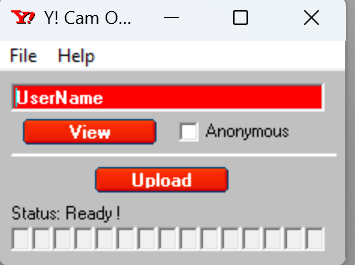
CamViewer interface showing its target field, view control and viewer status
CamViewer's own compact target-and-view surface survives without preservation-time network access.

The source contains Yahoo session acquisition, webcam-frame receipt and AVI assembly, plus an alternate path intended to cross the normal invitation/privacy boundary.

No endpoint was contacted. Operational details stay closed; the historical fact is that CamViewer attempted a substantial, privacy-invasive networked viewer.

A polished scanner

Presentation was part of the work

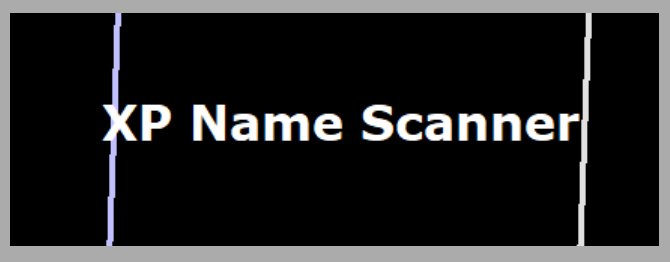
The splash is shown because it belongs to XP Name Scanner and because visual polish is itself part of the surviving evidence.

A polished scanner

XP Name Scanner

Surviving source
XP Name Scanner high-contrast splash screen
XP Name Scanner's high-contrast splash preserves the visual polish Jay noticed on rediscovery.

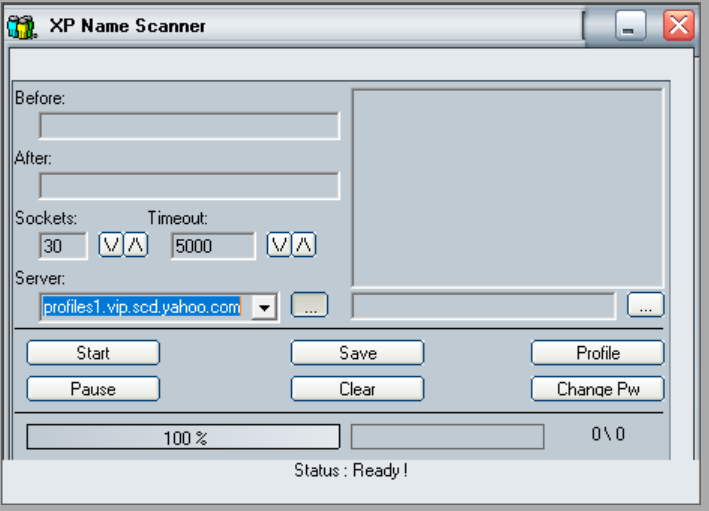
A contemporary readme says its purpose was to scan for unusual Yahoo email-style names that could no longer be created. The source adds a custom asynchronous socket layer, a socket pool, before-and-after name patterns, start/pause/save controls and profiles.

The preserved main interface is now shown with the project. Its obsolete endpoint is retained as historical UI evidence; no service was contacted to publish it.

Hidden in the component folders

The workshop also made its own building blocks

These compact records remain text-only because no approved screenshot binding is needed to explain them.

ProMenu OCX

Source confirmed

An owner-drawn menu control using Windows subclassing, menu-measure and draw messages, icons and custom metadata.

Socket OCX

Source confirmed

A custom asynchronous Winsock control for connect, listen, accept, send, events and error handling.

EliteProdigyYahoo OCX

Bounded public treatment

A reusable Yahoo operations component. Harmful operations remain non-operational in public.

Y! Router

Sensitive implementation withheld

A multi-socket client/upstream routing experiment with debug streams and a plug-in/type-library surface.

MSBLAST Remover

Defensive utility

Enumerated processes, attempted to stop and remove the known worm file, and directed users to Microsoft's patch. Real-world effectiveness was not tested.

Private did not mean small. It meant I was the audience.
Present-day reflection, supported by the recovered workshop

The archive does not need to pretend every experiment shipped. The achievement is visible in what survived: complete interfaces, awkward integrations, external components used honestly, defects left visible, and an appetite for building whole systems simply to learn whether I could.